AP HUMERUS
Complete anteroposterior humerus projection protocol
Exposure Factors
Medium exposure: Optimized parameters for complete humerus visualization
Bucky Configuration
Anatomical Structures Visible
Should be clearly observed:
- Complete humerus from shoulder joint to elbow
- Shoulder joint (glenohumeral)
- Elbow joint
- Complete humeral diaphysis
- Proximal and distal epiphysis of humerus
Joint inclusion verification:
Complete evaluation: Both joints must be included for proper humerus assessment
Cassette Size and Orientation
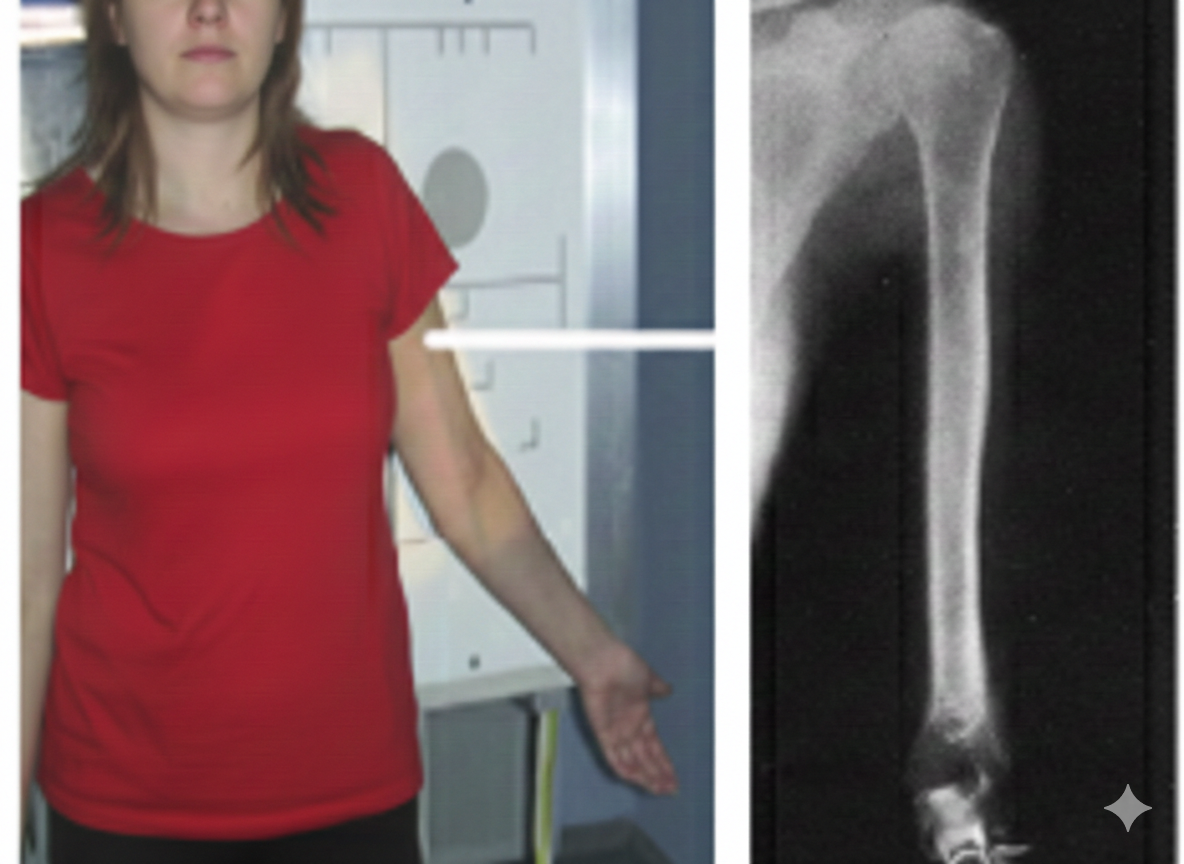
Longitudinal orientation to cover complete humerus from shoulder to elbow
Patient Positioning
Central Ray Point
Direction: Horizontal and perpendicular to center of arm
Centering: At center of cassette
Objective: Midpoint of humerus between shoulder and elbow
Specific Arm Position
Abduction
Arm separated from body
Sufficient to avoid thoracic superposition
Generally 15-30° from body
Hand Position
Complete supination
Palm upward
Elbow extended
Patient Instructions
"Do not breathe during the exposure"
Maintain position without movement and apnea during radiographic exposure
1. "Stand straight with your back against the bucky"
2. "Keep your arm away from your body"
3. "Turn your palm upward"
4. "Take a deep breath and hold it"
5. "Do not move during the exposure"
Optimal Image Characteristics
Complete humerus
From shoulder to elbow
No Superposition
Separated from thoracic structures
Joints visible
Shoulder and elbow included
Full field
Complete humerus in its length
Common Technical Challenges
Frequent problems in AP humerus projection:
- Insufficient abduction causing humerus superposition with thorax
- Incomplete supination affecting humeral rotation
- Exclusion of joints from poor cassette placement
- Arm rotation causing bone distortion
- Patient movement during exposure
- Incorrect centering cutting important areas
Solution: Ensure adequate abduction and complete hand supination
Special Considerations
Trauma Patients
If patient cannot abduct arm, position as tolerated and document limitation.
Obese Patients
Increase kV and mAs according to thickness adjustment table.
Geriatric Patients
Consider mobility limitations, possible need for seated position.